
UPF - how they affects our relationship with food
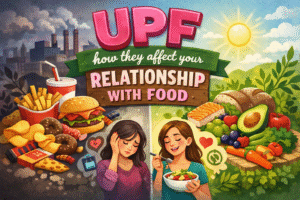
Beyond physical health, ultra-processed foods can influence how we think and feel about eating.
These foods are engineered to be irresistible. The perfect combination of crunch, sweetness, saltiness, and fat can override natural hunger and fullness signals. This makes it easy to eat mindlessly, even when we’re not physically hungry.
Many people report feeling “out of control” around ultra-processed foods, which can lead to guilt, shame, or a cycle of restriction and overeating. This isn’t a personal failure — it’s how these products are designed to work and why we’re hearing more and more about them.
Whole and minimally processed foods, on the other hand, tend to be more satisfying. Meals that include fibre, protein, and healthy fats help us feel full and nourished, reducing the urge to constantly snack.
Reducing ultra-processed foods can help to understand your body better. You may start to notice hunger cues more clearly, enjoy meals more fully, and feel more in tune with what your body actually needs.
This doesn’t mean never enjoying a takeaway or a favourite treat. Food is also about pleasure and connection. The goal is to make ultra-processed foods the exception rather than the foundation of your diet.
When we focus on real food most of the time, eating becomes less stressful and more enjoyable — and that’s just as important as the physical health benefits.
I tried to cut out ultra processed foods as much as possible and I found I was craving fruit and vegetables rather than sweet treats or carbs. It is hard to cut them out entirely but cooking more of your meals from scratch (and Thermomix makes that easier) really helps as you know what you are putting in to your dishes.
Tip:
Small switches can help you get on the way to reducing your UPF – try making your own stock paste rather than buying shop bought
Thermomix stock paste on cookidoo is really easy to make and lasts 3 months in the fridge